Section 2: Teaching & Learning
An Understanding of Teaching, Learning and/or Assessment Processes
Description
Since earning my PTLLS in 2012 and CELTA in 2013, I have delivered over 10,000 English language lessons to adult learners. These learners, ranging from Common European Framework of Reference for Languages (CEFR) levels A1 to C2, came from professional fields such as finance, IT, marketing, sales, and administration. My teaching was based on communicative language teaching (CLT) and task-based learning (TBL), which emphasise learner autonomy and real-world application.
I applied constructive alignment to my curriculum design. This enabled me to personalise content while ensuring learning activities and assessments aligned with intended learning outcomes. I adopted a blended learning model using Zoom, Microsoft Teams, Skype, and GoToMeeting as digital platforms evolved. This shift required converting print-based resources into multimodal materials and introducing flipped classroom strategies. For example, I provided vocabulary sets and readings before live sessions to maximise in-session practice.
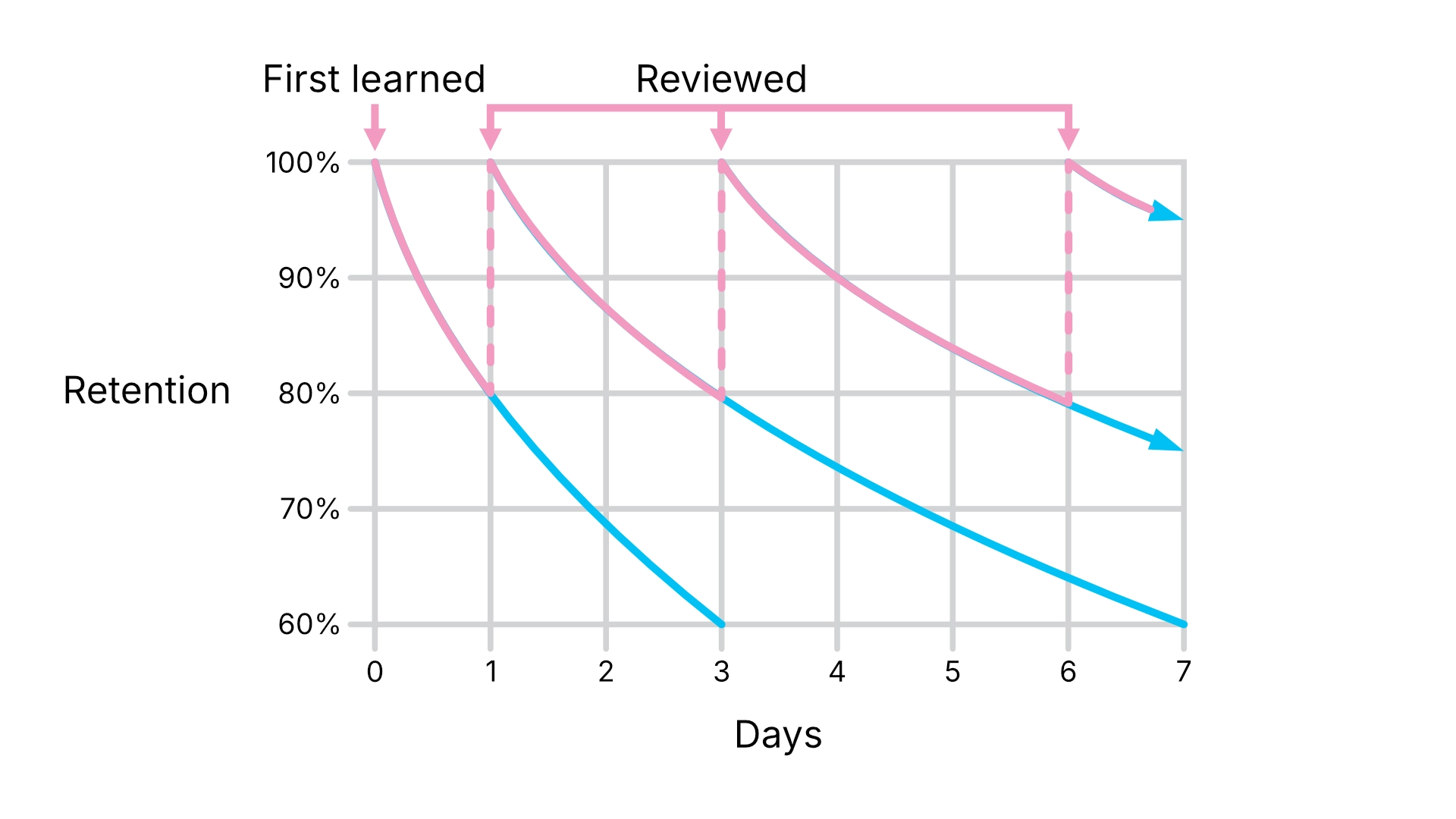
I embedded spaced repetition and retrieval practice across courses. I provided reports with new vocabulary after the initial lessons, and this vocabulary was revisited in different contexts, such as sessions themed around face-to-face meetings, phone calls, and data presentations, to enhance recall and application. These methods align with Ebbinghaus' forgetting curve, which illustrates how memory improves through spaced exposure.
Reflection
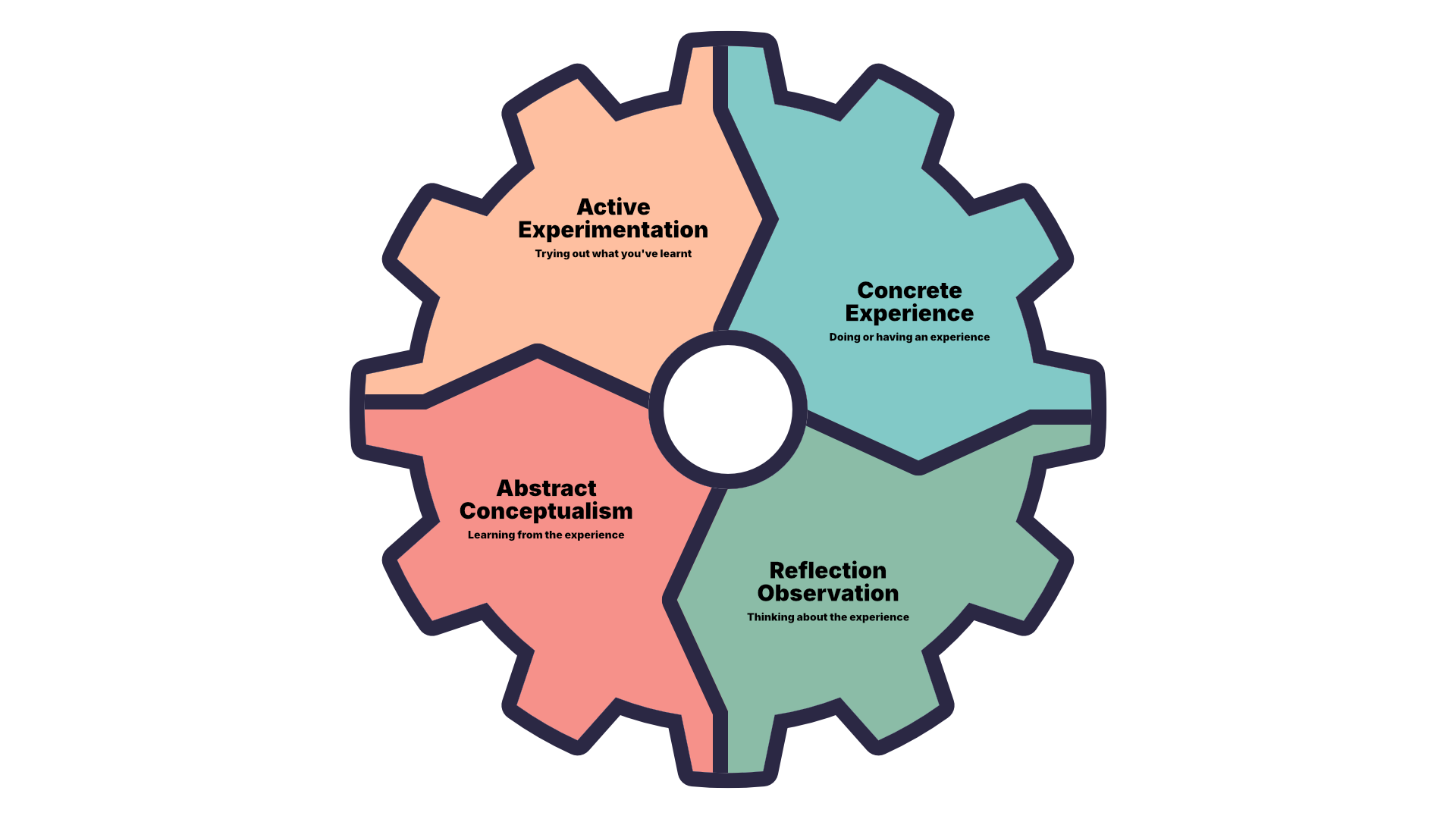
A key practice that I adopted was beginning each course with a structured needs assessment. This session focused on understanding the learners' goals, current proficiency, professional context, and preferred learning styles. Initially, I adhered closely to a rigid structure following the layout, but over time, I refined these assessments to be more conversational and collaborative, which improved engagement and trust. I revisited learners' goals, proficiency levels, and contexts at intervals suited to each course's length. This ensured that learners could use and reflect on their experiences, and then use this information to inform future actions. This followed Kolb's experiential learning cycle.
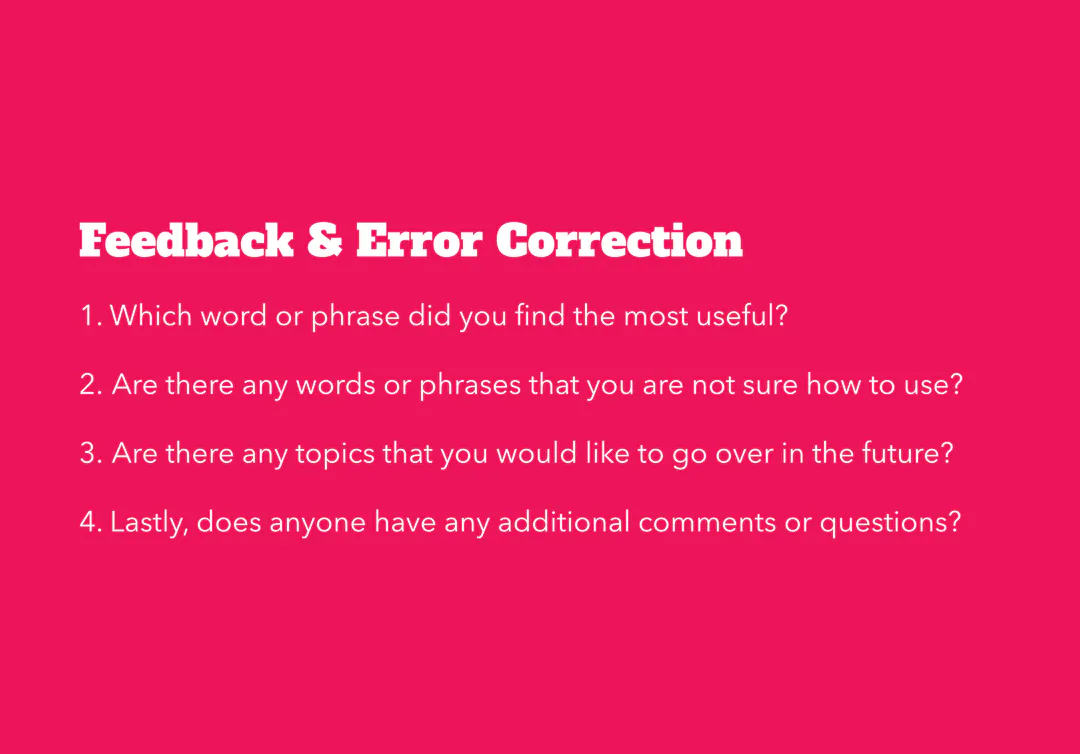
Just as needs assessments helped tailor course content to individual learners, I also recognised that the design of materials was critical in enabling equal access to learning. For example, an early slide on Feedback & Error Correction used white text over a red background with a decorative font — a combination that presented readability challenges, especially for learners with dyslexia or visual impairments. I redesigned the slide to use a clearer sans serif font, left-aligned black text on a white background, and added supporting visuals. This reduced cognitive load and improved legibility, particularly when learners were accessing slides independently after the session. This redesign aligns with WCAG 2.1 guidance on colour contrast and readability.
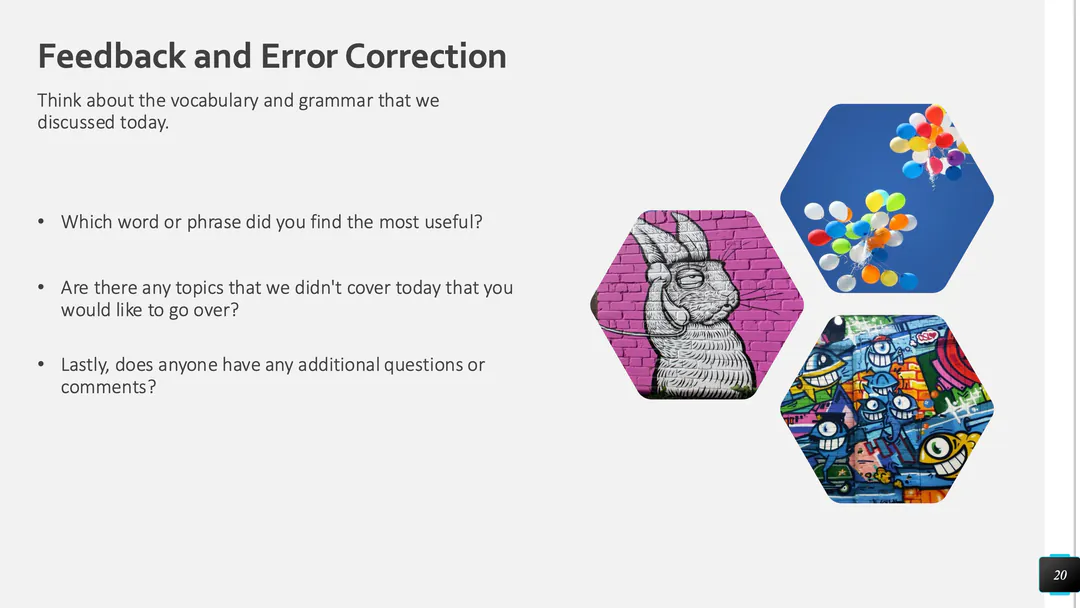
These same accessibility principles informed my practice at Imperial. In my DEPP ICT presentation, for example, I balanced lessons learnt from my own teaching with Imperial's published guidance on accessible PowerPoint design, ensuring materials were both engaging and compliant. When preparing training for staff on Canvas, I suggested adding a glossary of terms to help staff transition from Blackboard — a step particularly valuable for international colleagues for whom differences in terminology could otherwise create barriers. Colleagues in the Faculty of Medicine also highlighted the importance of needs assessments to ensure training reflects staff contexts and requirements. This resonated strongly with my earlier teaching experience, reinforcing the role of needs analysis in creating inclusive and relevant learning opportunities.
Through ongoing reflection and CPD — including Dyslexia Awareness: In partnership with Made By Dyslexia (2020, updated in 2025) — I developed more inclusive visual and content design practices. The positive impact of these changes was reflected in learner feedback and outcomes, which consistently recognised improvements in accessibility and clarity.
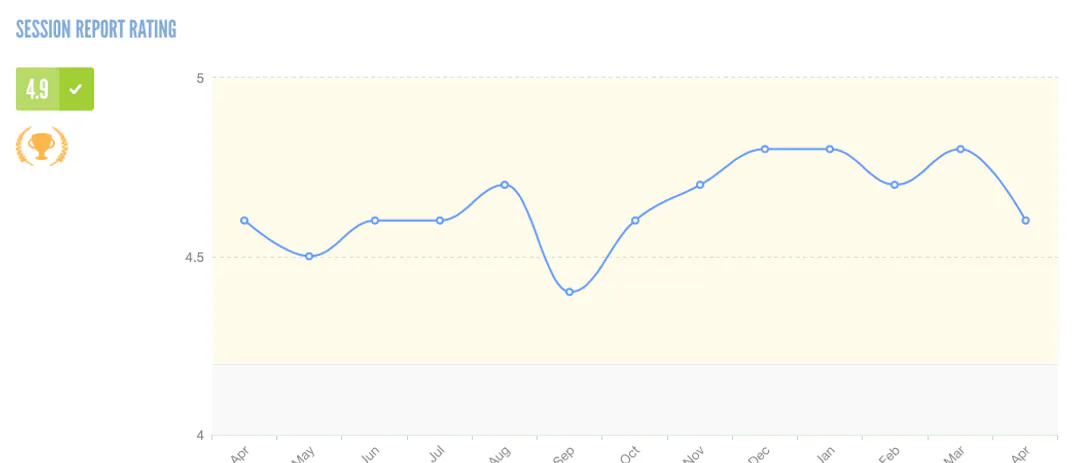
Learners regularly commented that the visual clarity and consistent structure of slides made content easier to absorb and revisit. This was reflected in ratings of 4.9/5 stars for my session reports, as learners frequently praised the relevance of materials, clarity of instruction, and individualised support.
Future Developments
Building on these reflections and the positive outcomes achieved, I am committed to continuously improving my teaching methods by focusing on accessibility, interactivity, and the considered adoption of emerging technologies. To support this, I maintain an evolving resource — Web Accessibility Resources and Tools: Guidelines, Checklists, and Testing Solutions (PDF) — which brings together up-to-date guidance, checklists, and testing strategies aligned with WCAG 2.1 and EN 301 549. This provides a framework that I draw on when advising colleagues and designing new materials.
As my earlier practice demonstrated the value of design clarity and needs analysis, I'm extending these principles into my current practice by exploring how AI-powered tools, like automated feedback generators and grammar-checking assistants, can support more personalised learning pathways. These tools help reduce the time staff spend on routine administrative tasks, freeing up attention for targeted, high-value support. At the same time, I encourage colleagues to treat these tools as a chance to develop learner agency and critical thinking.
Technology is also reshaping the teacher's role from content deliverer to facilitator and coach. Just as I once encouraged learners to reflect on their own goals and progress, I now encourage staff and students to engage critically with the outputs of tools such as Grammarly or ChatGPT — to ask why a correction has been made, not just what has changed. This reflective process turns passive use into active learning, aligning with my broader goal of building transferable skills and learner independence.
Finally, because higher education is often highly international, I am especially mindful of advising staff on inclusive design that supports colleagues and learners working in a second language. Building on my experience of scaffolding complex tasks and introducing glossaries in language teaching, I now encourage the same approaches in higher education training contexts. Breaking down tasks into smaller stages, scaffolding learning activities with glossaries or visual supports, and building in opportunities for retrieval and reflection all help reduce cognitive load and enable equitable participation across diverse cohorts.
Summary
This section demonstrates how I have:
- Made a commitment to continuous improvement in teaching through a focus on accessibility, interactivity, and thoughtful adoption of emerging technologies.
- Explored the use of AI-powered tools (for example, automated feedback generators, grammar-checking assistants) to support more personalised learning pathways and reduce teacher workload.
- Showed awareness of how technology is changing the role of the teacher — from content deliverer to facilitator and coach — and reflected this shift in practice.
- Emphasised the development of critical thinking, reflective learning, and learner agency, especially when learners interact with AI tools.
- Framed AI-enhanced learning as an opportunity to build active learning, transferable skills, and learner independence.
- Applied learning theories and inclusive design strategies from language teaching to my role at Imperial, including accessible presentation design, glossary development, and needs assessments to support staff and international cohorts effectively.
Evidence
Inclusive Design & Accessible Materials
- "After" slide showing accessibility improvements (Screenshot) Accessibility-led redesign (contrast, font, layout, visuals) aligned with WCAG principles; demonstrates concrete improvement to learner access and cognitive load.
- "Before" slide showing accessibility issues (Screenshot) Baseline for the redesign; evidences reflective practice and the rationale for accessibility changes.
- Web Accessibility Resources and Tools: Guidelines, Checklists, and Testing Solutions (PDF) Curated framework used in audits and improvements; shows process-led, reusable support for inclusive design.
- DEPP ICT Presentation (Slides) Application of accessibility principles in HE context; aligns personal practice with Imperial’s guidance on accessible PowerPoint design.
Needs Analysis & Curriculum Design
- First Session Questions (PDF) Structured needs assessment capturing goals, context, and preferences; underpins constructive alignment and inclusive lesson design.
- Kolb's Experiential Learning Cycle (Diagram) Adapted visual used to structure reflection and iteration; evidences the theory-to-practice link in goal-setting and course adaptation.
- Ebbinghaus' Forgetting Curve (Diagram) Supports spaced repetition and retrieval practice decisions; shows application of memory theory to sequencing and review.
Learner Impact & Evaluation
- Session report rating of 4.9/5 (Screenshot) Evidence of learner-perceived clarity, relevance, and support following accessibility and design improvements.
- Session evaluation rating of 4.5/5 (Screenshot) Participant evaluations from training sessions focused on inclusive practice; demonstrates sustained impact on professional learning.
Teaching Qualifications & CPD
- Cambridge ESOL Level 5* Certificate in Teaching English to Speakers of Other Languages (CELTA) (2013) (Certificate) Foundation in learner-centred pedagogy and differentiated instruction for diverse groups.
- Level 4 Preparing to Teach in the Lifelong Learning Sector (PTLLS) (2012) (Certificate) Formal teacher training covering planning, assessment, and curriculum delivery.
- Dyslexia Awareness: In partnership with Made By Dyslexia — proof of completed modules (2025) (Badge) Recent CPD focused on neurodivergent learners; informs inclusive design choices and accessible communication.
- Dyslexia Awareness: In partnership with Made By Dyslexia (2020) (Certificate) Prior certification evidencing ongoing commitment to accessibility and learner support.
Further Reading
- London School of Economics Constructive alignment. Available at: https://info.lse.ac.uk/staff/divisions/Eden-Centre/Resources-to-support-your-practice/Constructive-alignment
- Main, P. (2023) Ebbinghaus forgetting curve. Structural Learning. Available at: https://www.structural-learning.com/post/ebbinghaus-forgetting-curve
- Main, P. (2022) Spaced practice: A teacher's guide. Structural Learning. Available at: https://www.structural-learning.com/post/spaced-practice-a-teachers-guide
- McLeod, S. (2025) Kolb's learning styles and experiential learning cycle. Simply Psychology. Available at: https://www.simplypsychology.org/learning-kolb.html
- WCAG (2025) Text over images: The impact on accessibility. Available at: https://www.wcag.com/blog/content-over-images-how-does-this-ux-ui-trend-impact-accessibility/
- Western Governors University (2021) What is blended learning? Available at: https://www.wgu.edu/blog/blended-learning2109.html